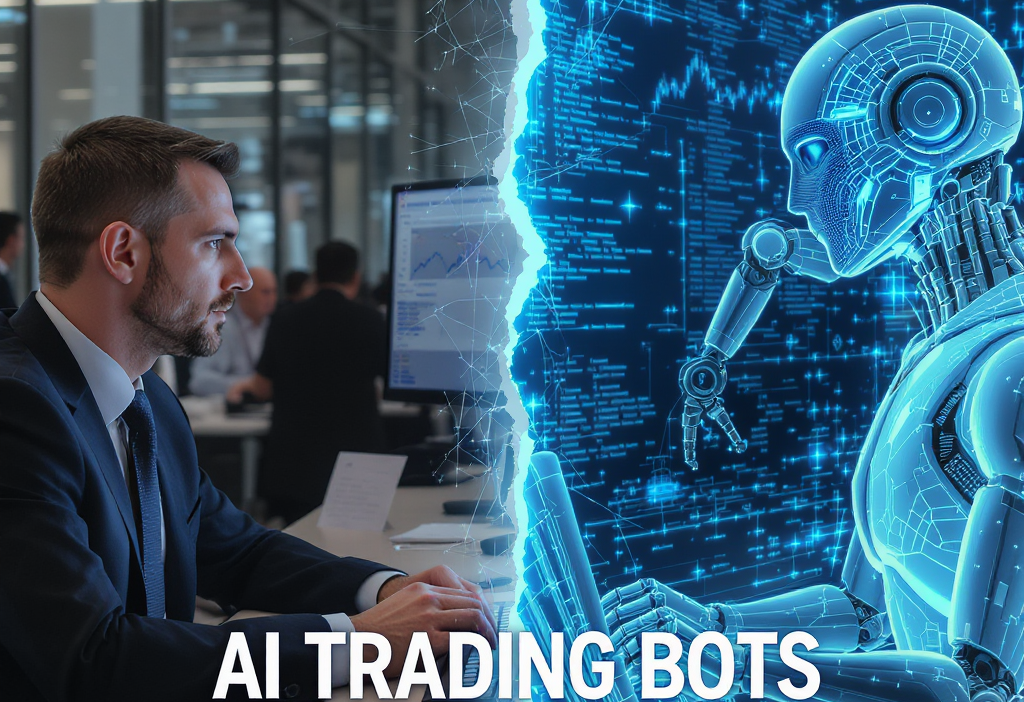
AI Trading Bots vs Human Traders
The rise of AI trading bots has sparked intense debate about their ability to outperform human traders. This article examines empirical evidence, technological limitations, and common misconceptions surrounding automated trading systems. We explore whether these algorithms truly represent a paradigm shift or simply another tool in the financial arsenal.
The Evolution of Automated Trading Systems
The evolution of automated trading systems is a story of escalating complexity, driven by the dual engines of computational power and data availability. It began not with AI, but with deterministic, rule-based algorithms executed by institutional players. The 1970s and 80s saw the rise of simple automated systems for index arbitrage and portfolio insurance, which followed explicit if-then logic. These were not “intelligent,” but they proved machines could execute predefined strategies faster and more reliably than humans.
The true paradigm shift arrived with the digitization of markets and the advent of high-frequency trading (HFT) in the 1990s and 2000s. These systems used sophisticated statistical arbitrage models to exploit microscopic market inefficiencies at sub-millisecond speeds. A landmark example was the success of firms like Renaissance Technologies, whose Medallion Fund used complex mathematical models—initially more aligned with advanced signal processing than modern ML—to generate unprecedented returns. This era cemented the supremacy of speed and quantitative rigor, paving the conceptual road for AI.
The transition from hard-coded rules to adaptive, learning systems began in earnest with the big data revolution. As computational resources exploded (via GPUs and cloud computing) and market data feeds became torrential, developers could move beyond static algorithms. The key milestone was the application of machine learning—first with simpler models like support vector machines and random forests for pattern recognition, and later with deep learning neural networks. These models could, in theory, discover non-linear patterns and relationships from historical data that were impossible to encode manually. This evolution from a rule-based to a pattern-recognition foundation sets the stage for understanding the intricate inner workings of contemporary AI trading bots, which we will deconstruct next.
How AI Trading Bots Actually Work
Building on the historical shift from rule-based algorithms to adaptive systems, we now dissect the core technical architecture of a modern AI trading bot. At its foundation lies a robust data ingestion pipeline. This system continuously consumes vast, high-frequency, multi-modal data—not just price and volume, but also news sentiment, order book depth, and alternative data like satellite imagery. This raw data is then transformed.
The critical next step is feature engineering, where raw data is converted into predictive signals. This involves calculating technical indicators, statistical measures like volatility clusters, and creating labeled datasets for supervised learning (e.g., classifying future price movements as up/down). For more advanced systems, this process is automated using deep learning to discover latent features directly from the data.
The machine learning models are the decision engines. Common approaches include:
- Supervised Learning (e.g., Gradient Boosted Trees like XGBoost, or Recurrent Neural Networks): These are trained on historical features to predict a target, like next-period return, by identifying complex, non-linear patterns from past market states.
- Reinforcement Learning (RL): Here, an AI agent learns an optimal trading policy through trial-and-error in a simulated environment, maximizing a reward function (e.g., Sharpe ratio), learning nuanced behaviors like position sizing and market timing.
The model’s signal feeds into an execution engine, a sophisticated algorithm that minimizes market impact and transaction costs by slicing orders and choosing optimal venues. Crucially, the entire system operates within a tightly controlled risk and portfolio management layer, which applies pre-defined limits on exposure, drawdown, and volatility, ensuring the AI’s actions remain within acceptable bounds before any trade is ever sent.
Quantitative Evidence of AI Trading Performance
Following the technical blueprint of how AI trading systems are built, we now examine their empirical track record. The quantitative evidence presents a nuanced picture, heavily dependent on time horizon, market regime, and the critical distinction between backtested and live performance.
Academic studies and industry reports often show AI strategies, particularly high-frequency and statistical arbitrage, outperforming human discretionary traders on a risk-adjusted basis over specific periods. For instance, some equity market-neutral AI funds have reported multi-year Sharpe ratios above 2.0, significantly higher than the hedge fund industry average. These systems excel at exploiting subtle, non-linear patterns in vast datasets at speeds impossible for humans.
However, interpreting this data requires severe caution. Survivorship bias is profound; failed bots vanish without a trace, skewing public data toward success. A 2020 review of quant finance papers found that fewer than 10% reported negative or neutral results. Furthermore, stellar backtests often decay in live markets due to overfitting—where a model learns noise, not signal. The case of Long-Term Capital Management remains a classic failure: a model-based approach collapsed under unforeseen correlation shifts, a risk its metrics didn’t capture.
Key performance metrics tell the full story only when combined:
- Maximum drawdown reveals an AI’s vulnerability during market stress, often exposing a lack of true economic understanding.
- Consistent alpha generation across volatile and calm periods indicates robustness, yet many bots see alpha evaporate during regime changes.
- High Sharpe ratios can mask exposure to tail risk, as seen in the 2018 “Volmageddon” where short-volatility AI strategies suffered catastrophic, swift losses humans might have avoided.
Thus, while quantitative evidence confirms AI’s superiority in executing defined, repetitive statistical tasks, it also highlights its limits within the bounds of historical data. This sets the stage for examining the uniquely human strengths that these statistical models cannot encode.
Human Trading Strengths That AI Cannot Replicate
While the previous chapter established AI’s statistical prowess in specific, quantifiable domains, this analysis turns to the irreplicable human strengths that persist. These advantages are not about speed or processing volume, but about qualitative synthesis and contextual genius that current AI cannot authentically emulate.
Human traders operate with an intuitive pattern recognition honed by experience, connecting disparate signals—a CEO’s hesitant tone, an unusual supply chain rumor, a geopolitical tension’s historical echo—into a coherent narrative. This allows for the interpretation of ambiguous information, where data is sparse or contradictory. For instance, a human might sense impending regulatory shift from a senator’s nuanced questioning during a hearing, a context AI struggles to parse.
Crucially, humans excel at qualitative analysis of company management. Assessing the competence, integrity, and vision of leadership through earnings calls and body language is a deeply human judgment. This skill proved vital in avoiding firms like Theranos, where quantitative metrics were fabricated, but qualitative scrutiny raised alarms.
Furthermore, human traders are better equipped to navigate market regime changes and identify black swan events. The 2008 financial crisis and the COVID-19 market crash were not mere statistical outliers; they were fundamental shifts in reality. Humans could rapidly reassess core assumptions—like “markets will remain liquid”—while many AI systems, trained on historical correlations, catastrophically failed. The “Flash Crash” of 2010 was ultimately halted by human judgment overriding automated systems.
These capabilities mean human intuition often outperforms algorithms in low-probability, high-impact scenarios, where past data is an unreliable guide. The next chapter will explore how these human strengths directly correspond to the technical limitations inherent in current AI architectures.
Technical Limitations of Current AI Systems
While the previous chapter highlighted uniquely human strengths, a sober assessment of AI’s current technical limitations is crucial. These constraints are not mere bugs but fundamental barriers rooted in mathematics, computer science, and the nature of financial markets.
The core issue is overfitting. AI models, especially complex deep learning networks, excel at finding intricate patterns in historical data. However, this often leads to memorizing noise rather than learning generalizable principles. A model may perform spectacularly on backtests yet fail catastrophically in live markets because it optimized for random, non-recurring correlations.
This is exacerbated by the curse of dimensionality. As models incorporate thousands of potential features—from price data to alternative signals—the required training data grows exponentially. The available financial time series is often insufficient, making robust statistical inference impossible and models fragile.
Furthermore, AI systems struggle with structural breaks—fundamental shifts in market dynamics caused by new regulations, macroeconomic regimes, or geopolitical realignments. Unlike a human who can contextually reassess, a bot will blindly apply its learned rules until it is forcibly retrained, often after significant losses.
Even in their supposed domain of high-frequency trading, latency and data quality impose hard limits. Physical constraints on data transmission and order execution create a technological arms race. Moreover, models are only as good as their input; erroneous or manipulated tick data can trigger cascading faulty decisions.
Finally, the computational resource requirement for training state-of-the-art models is immense, limiting access and increasing operational costs. This reality contrasts sharply with the myth of a perpetually optimizing, infinitely scalable system. These technical ceilings ensure that, for now, AI trading bots operate within a bounded sphere of competence, a theme we will contrast in the next chapter by examining the specific conditions where those bounds are not a hindrance but a supreme advantage.
Market Conditions Where AI Bots Excel
While the previous chapter detailed the technical limitations of AI systems, it is crucial to recognize the specific domains where their capabilities are formidable. AI trading bots excel in environments defined by structured data, clear statistical edges, and the need for superhuman speed or scale.
High-Frequency Arbitrage is a quintessential example. AI systems dominate by exploiting minute price discrepancies across venues or related assets, operating on a market microstructure level. They capitalize on fleeting opportunities measured in microseconds, a timescale where human reaction is physically impossible.
In liquid, high-volume markets, AI shines at statistical arbitrage and mean-reversion strategies. Here, bots process vast datasets—price histories, order book dynamics, ETF constituents—to identify subtle, non-intuitive correlations and temporary deviations from statistical norms. They execute complex, multi-legged trades to capture these microscopic inefficiencies, which are often invisible to human traders due to data overload.
The core advantage is the relentless, unbiased processing of structured, quantitative information. AI does not suffer from fatigue, emotion, or attention lapses. In scenarios where the profit mechanism is a persistent, small statistical anomaly repeated thousands of times, the machine’s capacity for speed, precision, and scale is unbeatable. However, this dominance is context-bound, relying on stable market regimes and liquid instruments, a fragility that connects directly to the myths of infallibility addressed next.
Common Myths and Misconceptions Debunked
While the previous chapter highlighted AI’s formidable advantages in specific, data-rich environments, these capabilities have spawned a set of dangerous and persistent myths. A clear-eyed understanding requires debunking these misconceptions.
The most seductive is the set-and-forget profitability myth. An AI trading bot is not a perpetual money machine. Markets evolve, correlations break, and regulatory landscapes shift. A model trained on a specific volatility regime will fail when that regime changes. Successful deployment demands ongoing maintenance, monitoring, and adaptation—humans must continuously validate performance, manage infrastructure, and oversee model retraining.
This directly contradicts the myth of guaranteed returns. No trading system is infallible. AI models extrapolate from historical data and probabilistic patterns; they cannot account for unprecedented “black swan” events with certainty. The related belief that AI can predict market crashes with certainty is equally false. While some systems may detect mounting fragility or crowded positioning, a precise trigger and magnitude remain inherently unpredictable.
Finally, the notion that these systems operate without human oversight is a recipe for disaster. AI executes strategies, but humans must define the ethical, financial, and risk parameters. They are responsible for the guardrails—the risk management frameworks, position limits, and circuit breakers—that prevent a sophisticated algorithm from self-destructing during anomalous conditions. The reality is a symbiosis, not a replacement, where human strategic oversight is paramount to harnessing AI’s analytical power responsibly.
Risk Management in AI-Driven Trading
Building on the understanding that no trading system is infallible, effective AI-driven trading hinges not on prediction perfection, but on sophisticated, multi-layered risk management frameworks. These systems move far beyond simple human-set stop-losses, employing dynamic algorithms that continuously adjust to market volatility and portfolio health.
Core to this is adaptive position sizing, where algorithms calculate trade size not just from account equity, but from real-time market volatility and the predicted probability of success. This is integrated with portfolio optimization techniques like mean-variance optimization or risk parity, which AI constantly rebalances to manage correlation risks—preventing unintended concentration in seemingly diverse assets that move in lockstep during stress.
Liquidity risk is managed by algorithms that model market impact, splitting large orders and avoiding illiquid venues. Crucially, AI systems must grapple with model risk—the danger their own logic fails. This is addressed through rigorous stress testing and scenario analysis, running models against extreme but plausible events, like flash crashes or geopolitical shocks, to expose hidden tail risks.
However, these quantitative defenses have limits. Black swan events or unprecedented market regimes can bypass historical training data. Therefore, the most robust frameworks incorporate circuit breakers and maximum drawdown limits, triggering a pause or a fallback to human oversight when losses breach predefined, non-negotiable thresholds. This seamless handoff underscores that while AI manages operational risk at scale, ultimate strategic risk control remains a human responsibility, a precursor to the broader governance issues explored next.
Regulatory and Ethical Considerations
Building on the need for sophisticated risk management, the deployment of AI trading bots introduces complex regulatory and ethical considerations that extend beyond a single firm’s internal controls. The regulatory landscape is a patchwork, struggling to keep pace with technological evolution. Core frameworks like the EU’s MiFID II and the US SEC’s Regulation Systems Compliance and Integrity (Reg SCI) impose requirements for algorithmic testing, record-keeping, and circuit breakers. However, they often treat AI as merely a faster form of traditional automation, missing its unique adaptive and opaque nature.
A primary concern is market fairness and manipulation. AI systems can execute strategies at speeds and complexities that evade traditional surveillance, potentially engaging in manipulative practices like quote stuffing or layering in ways that are difficult to detect and attribute. The concentration of trading power among a few entities with the most advanced AI raises ethical questions about creating a two-tiered market, disadvantaging retail investors and eroding trust.
The systemic risk is profound. Correlated AI models reacting to the same signals can amplify market shocks, leading to flash crashes or liquidity black holes. This is a direct extension of model risk discussed previously, but at a macro scale. The opacity of “black box” AI also conflicts with fundamental regulatory principles of transparency and auditability.
Future regulatory developments will likely focus on:
- Explainability mandates: Requiring firms to demonstrate an understanding of their AI’s decision-making logic, even if simplified.
- Pre-trade certification: More rigorous, scenario-based validation of AI models before live deployment.
- Industry self-regulation: Initiatives to develop standards for AI governance, data provenance, and kill-switch protocols.
Ultimately, the goal is not to stifle innovation but to ensure that the pursuit of alpha does not compromise market integrity or stability, setting the stage for exploring collaborative human-AI frameworks.
The Future of Human-AI Collaboration in Trading
Following the complex regulatory and ethical frameworks discussed, the focus shifts from adversarial dynamics to integration. The future of trading lies not in a binary contest but in a sophisticated human-AI collaboration, a hybrid model that leverages the distinct strengths of each to navigate regulated markets and mitigate systemic risks.
In this partnership, AI systems act as superhuman data processors, executing high-frequency arbitrage, scanning global news sentiment in real-time, and identifying subtle statistical patterns across petabytes of market data—tasks at which they are unequivocally superior. Meanwhile, human traders evolve into strategic overseers and qualitative interpreters. They provide the crucial context AI lacks: assessing the geopolitical impact of an unexpected event, applying ethical guardrails within regulatory bounds, and making discretionary calls during “black swan” events where historical data is irrelevant.
Emerging technologies will cement this symbiosis. Explainable AI (XAI) will be critical, transforming black-box predictions into interpretable reasoning, allowing human experts to audit, trust, and refine AI suggestions. Interactive machine learning systems will enable traders to steer models with qualitative feedback, incorporating “soft” factors like central bank rhetoric or regulatory intent. Furthermore, AI will increasingly model complex market networks to simulate systemic risk, a direct response to the concerns raised previously, with humans evaluating the outputs for macro-prudential decisions.
As both sides advance, the collaboration will deepen. AI will handle tactical execution within strict, human-defined risk parameters, while humans focus on portfolio-level strategy, creative hypothesis generation, and managing the AI ecosystem itself. This division of labor, blending artificial computational power with human judgment and ethical responsibility, represents the most robust path forward for a stable, efficient, and innovative financial market.
Conclusions
AI trading bots demonstrate impressive capabilities in specific domains but cannot fully replace human traders. The most effective approach combines AI’s computational power with human judgment and intuition. While myths of infallible automated systems persist, reality shows that successful trading requires careful integration of both technological and human elements. The future lies in strategic collaboration rather than competition between man and machine.